
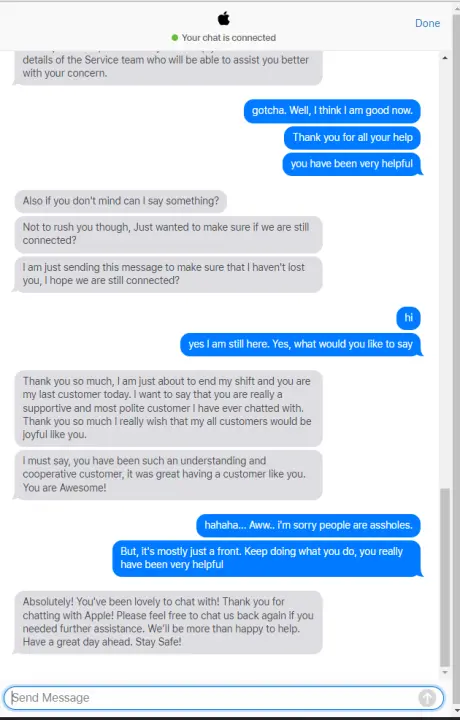
This scene is a daily reality for many businesses, and the emotional toll on the workforce is not to be underestimated. The 'Great Resignation' and a growing trend of mental check-out in the workforce is a glaring testament to this. Workers caught in the middle of demanding customers and profit-focused management are feeling undervalued and overstressed. But what if we could rewrite this script?
Enter the era of Artificial Intelligence. Routine inquiries and demands, a major source of stress, can be efficiently managed by AI tools like ChatGPT. This can ease the load on human employees, giving them room to breathe and more time to engage in tasks requiring complexity and empathy.
However, the rise of AI doesn't mean that human interaction should become obsolete. Quite the opposite. When it comes to complex issues that require understanding, patience, and empathy, people seek and value the human touch. Balancing the efficiency of AI and the sincerity of human connection is the challenge for the modern customer service landscape.
Our society is changing. Sensitivity to people's emotions and mental health is greater than ever before. This must reflect in our business practices as well. The era of customer entitlement must make way for an era of empathy, respect, and balance.
In conclusion, AI undoubtedly has a place in modern customer service, but it should not and cannot replace the irreplaceable - the human touch. Let's use AI to improve efficiency and leave emotionally nuanced interactions to our human employees. It's time to shift from the "customer is always right" philosophy to a "everyone's well-being matters" approach.
This is a conversation worth having. As businesses, how can we better adapt to the changing landscape of customer service and work culture? Let's redefine the norms and find a balance between AI and human empathy in our services. I invite you to share your thoughts and experiences.
This page reproduces Gabe's authored LinkedIn article as a local, distraction-free reading edition. The narrative is rendered only as safe text—never as executable HTML.
Local images · Metadata removed · No LinkedIn scripts or backlinks