
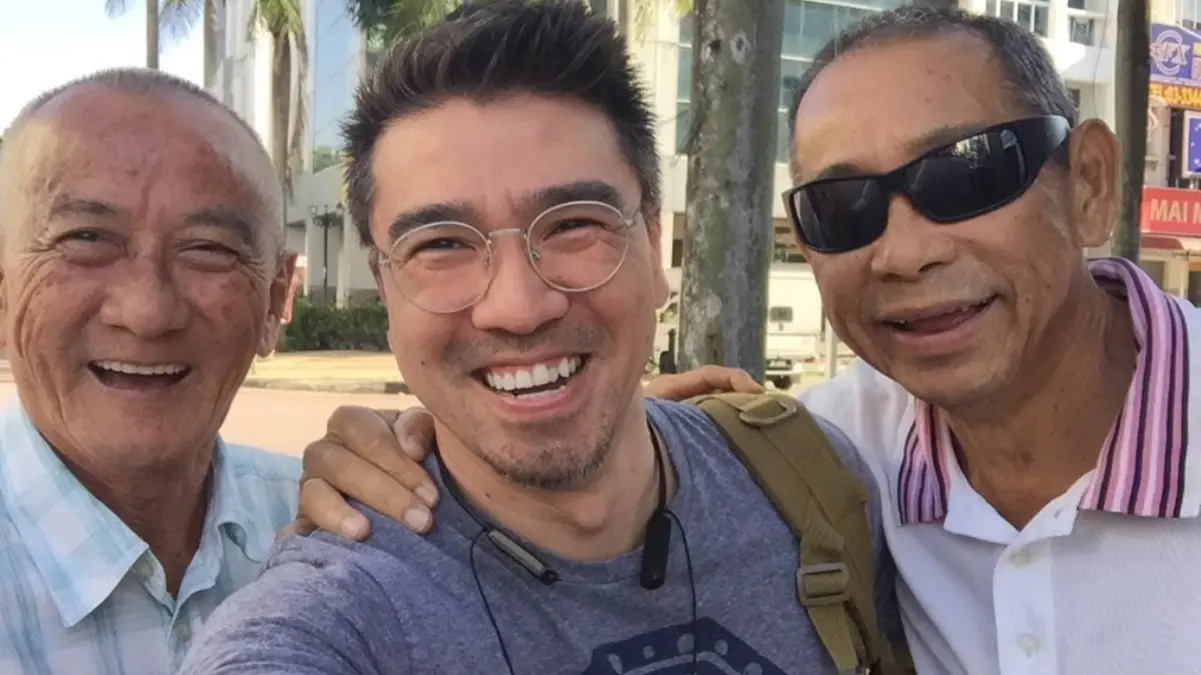
I’ve spent my life at the intersection of two worlds—one grounded in the dignity of craftsmanship and self-reliance, the other steeped in corporate structures, degrees, and increasingly impersonal work. Growing up in Malaysia, I was raised by a father who knew the value of hard work, not just as a way to make a living, but as a way of living. He was a craftsman, a business owner who built a thriving glass and aluminum fabrication business with his hands, his skills, and an uncompromising commitment to quality. Through his life and legacy, I learned the power of practical skills and saw how they could create not only wealth but fulfillment and independence.
But today, as a business owner myself, I am concerned for America’s future. I see a labor force struggling to find stability, college graduates burdened by debt they may never pay off, and an economy that places corporate profits above personal fulfillment and community impact. If America wants to create a sustainable labor force, we need to turn our attention back to the power of skilled trades, apprenticeships, and small businesses that can make a difference in both the economy and people’s lives.
The Lessons of a Skilled Business
My father’s journey was marked by hardship and resilience. His family had fled Mao’s Cultural Revolution in China with nothing but their will to survive, and he grew up in Malaysia with few resources or opportunities. His mother died when he was just a child, and his stepmother’s resentment nearly cost him his life. He spent his teenage years sleeping in attics and working in my uncle’s glass shop, where he learned the trade that would eventually define his life.
My father didn’t have the luxury of formal education, nor did he need it. He had something far more valuable—a skill, a craft that he could apply, adapt, and turn into a business. And it wasn’t just a business for him; it was a way to contribute to his community. He began training apprentices, young men who, like him, needed a way to support themselves without relying on a degree they couldn’t afford or see the value in. Many of these apprentices went on to start businesses of their own, finding success by following in my father’s footsteps. Some moved into related fields, like kitchen installations and interior design, using the foundational skills he’d taught them to build fulfilling careers.
The Irony of Success
The irony, of course, is that my father’s success inspired a vision for the next generation that looked very different. These men who had carved out lives without formal education, who had built businesses and raised families through sheer grit and practical knowledge, dreamed of a different path for their children. They wanted to send their kids to the best schools, to give them opportunities that they had never had. For them, success meant being able to afford a good education for their children, one that would lead to stable, prestigious careers.
Yet many of these children, despite their degrees and accolades, found themselves struggling in a system that didn’t reward them the way their parents had imagined. Burdened by student debt, these graduates entered a job market that was either oversaturated or undervalued their credentials. They knew more about abstract theories than practical skills, and they were often overqualified for roles that didn’t require a degree but still couldn’t find the jobs they’d been promised. It was a painful realization: despite their academic achievements, they were not much closer to financial stability than their parents had been when they were starting out.
An Unsustainable Workforce
America’s labor force is facing a sustainability crisis, one driven by an overemphasis on credentials and a neglect of practical, marketable skills. We’ve created an educational pipeline that produces graduates who are equipped with knowledge but often lack applicable skills, and this disconnect is reflected in the economy. Businesses in skilled trades—from construction to plumbing to skilled manufacturing—are struggling to find workers. Meanwhile, industries that require formal education are oversaturated, leaving countless college graduates underemployed, disillusioned, and unable to repay the debts they accrued in pursuit of the “American Dream.”
The problem is more than economic; it’s cultural. As a society, we have placed too much value on formal education and white-collar jobs, while looking down on the skilled trades that are the backbone of any community. Yet when we look at the businesses that hold communities together, that provide real, tangible services, they are often small, skills-based businesses that don’t require a degree. They require dedication, training, and a commitment to the craft—qualities that, if cultivated, can lead to sustainable careers and meaningful work.
Betting on Myself
After earning my degree in the United States and spending nearly a decade climbing the corporate ladder, I eventually had to confront the same truth my father did. Corporate loyalty is a myth, and job security is an illusion. I watched as talented colleagues were let go with little warning, their contributions overlooked in favor of “cost efficiency” and profit margins. The message was clear: in corporate America, you are only as valuable as your last quarter’s results, and when the numbers don’t add up, no one is indispensable.
I realized that if I wanted real stability, if I wanted to build something I could rely on, I needed to do it myself. I decided to leave the corporate world and apply the skills I had accumulated—both through formal education and hands-on experience—to build a business of my own. It was a decision rooted in the lessons my father had taught me: that true security comes not from a paycheck, but from the ability to create value, to meet a need, and to do work that is both fulfilling and impactful.
Today, as a business owner, I feel a responsibility not just to myself but to the next generation. I believe we need to create pathways for young people that go beyond the traditional college route, pathways that offer practical skills, mentorship, and the opportunity to build something meaningful. Apprenticeships, internships, and on-the-job training are powerful tools that can equip individuals with marketable skills without the burden of debt and the uncertainty of a degree-dependent career.
A Vision for the Future of American Labor
If America wants to build a sustainable workforce, we need to re-evaluate our priorities. We need to support small businesses, encourage skilled trades, and recognize that practical skills are as valuable—if not more so—than formal credentials. Small businesses, particularly those in the trades, play a critical role in our economy and in our communities. They provide real services, create local jobs, and offer a level of customer care and community engagement that large corporations simply cannot match.
The future of work in America must be one where people can build fulfilling careers without having to fit into a narrow mold. We need to cultivate a culture that values skills and entrepreneurship, that encourages people to take ownership of their careers, and that celebrates the diversity of talents that make up our workforce. If we can shift our focus from corporate profits to community prosperity, from credentials to competencies, we can create a labor force that is resilient, adaptable, and truly sustainable.
Building a New American Dream
My father taught me that success is not about prestige or credentials; it’s about mastery, integrity, and the ability to make a difference. He showed me that there is dignity in every job, that there is value in every skill, and that true security comes from knowing you can rely on yourself. As I build my own business, I carry these lessons with me, knowing that the path to a fulfilling career is not found in titles or degrees but in the work itself and the impact it has on those around you.
In an era where corporate loyalty is fading, and where employees feel increasingly disconnected from their work, we need a return to these values. America’s future depends not on building bigger corporations but on cultivating a culture of skilled, independent workers who are empowered to build their own futures. It’s time to rediscover the dignity of labor, to invest in the skills that truly matter, and to create a workforce that is as resilient and adaptable as the challenges we face.
As a business owner, I am committed to fostering this change. I believe that by focusing on skills, by investing in people rather than credentials, we can build an economy that works for everyone—a place where the American Dream is within reach not just for the few but for the many, one craft, one skill, and one business at a time.
This page reproduces Gabe's authored LinkedIn article as a local, distraction-free reading edition. The narrative is rendered only as safe text—never as executable HTML.
Local images · Metadata removed · No LinkedIn scripts or backlinks