
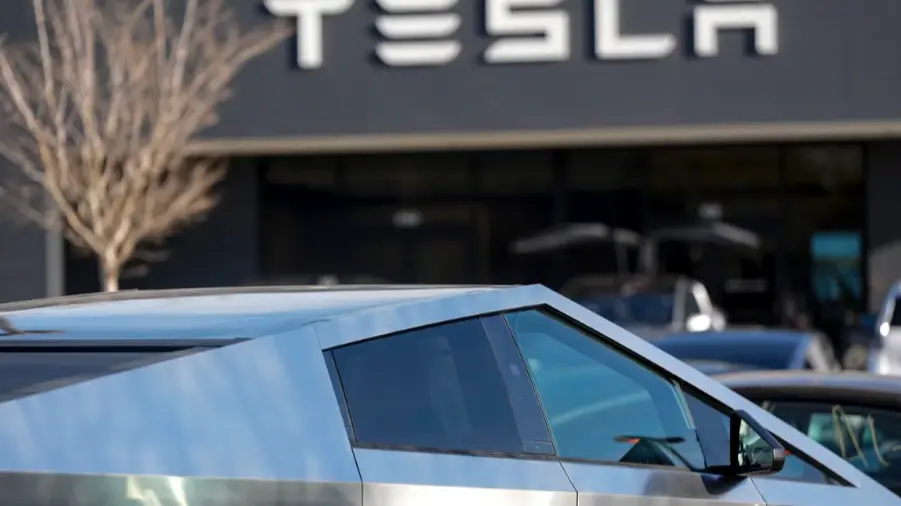
In March 2025, reports emerged of hundreds of Tesla vehicles piling up in Canadian parking lots, curiously registered—but seemingly unsold. The registration spike occurred just before the Canadian government froze its iZEV rebate program. In a span of three days, four Tesla outlets registered over 8,600 vehicles—effectively locking in $43 million CAD in government subsidies, representing more than half the remaining program budget.
Dealerships across Canada cried foul. Tesla's maneuver, they claimed, not only drained the pot but left other retailers holding the bag—unable to claim rebates they had fronted to customers. Meanwhile, the parked EVs, captured by drone footage and social media sleuths, cast a shadow: was this a loophole or a fraud?
But this isn’t the first time Musk has danced dangerously close to the edge of the rulebook. It’s his signature move: bold action, public reaction, legal firestorm, and—more often than not—a bounce in the markets.
A Pattern in the Chaos
Musk’s business history reads more like a manifesto than a resume: defy convention, break things, and build while the dust settles. And Tesla's stock movements follow suit. Over the past five years, the stock has demonstrated a repeating pattern of violent surges and equally sharp corrections, with swings of 30–40% becoming almost predictable. Some call it volatility. Others call it intention.
The pump-and-dump playbook—long whispered about in crypto and penny-stock circles—has found a new stage in large-cap equities. Musk, a known provocateur, leveraged similar tactics during his infamous Dogecoin and Bitcoin campaigns, tweeting memes, raising hopes, and shifting billions in market cap overnight. Whales followed. Some got rich. Others were left holding the bag.
And it’s worth noting: Dogecoin’s trajectory and Tesla’s stock chart aren’t as different as one might assume. In both cases, Musk’s charisma and visibility moved markets—without a single earnings report.
This Isn’t About Cars Anymore
The Canadian incident may not be a scandal. It may be a signal.
As China’s EV industry, led by BYD, begins to outmaneuver Tesla on both price and scale, Musk finds himself facing a new reality: Tesla is no longer the underdog. It’s an incumbent, and in certain markets, even an outsider.
To counter this, Musk appears to be pivoting—not just in products, but in global alignment.
Tesla’s open lean toward right-wing politics, especially its increasing proximity to Donald Trump, shouldn’t be seen as a coincidence. If Musk senses regulatory heat in Canada, his fallback is already in motion: political cover from Washington—should Trump return to the Oval Office. In a second Trump term, Musk becomes more than a business figure—he becomes a nationalist asset, a tech industrialist with powerful leverage over supply chains, jobs, and energy narratives.
Should Canada pursue prosecution or seek financial clawbacks, expect Musk to lean into the political optics: a homegrown innovator being punished abroad. And from there, it’s only a matter of time before calls emerge to "protect American business from foreign hostility." That narrative has worked before—and under a Trump administration, it would likely stick.
Manufacturing Volatility
The theory gaining traction among observers isn’t that Tesla fumbled in Canada. It’s that Musk wants the noise. Wants the smoke. Needs the volatility.
Why? Because volatility is profitable—if you control it.
Some speculate that Musk is playing out a long-term pump-and-dump cycle at scale. The ingredients are familiar: introduce controversy, let the stock slide, accumulate, then announce a massive innovation (robotaxis, AI, a new Indian Gigafactory), watch the price soar—and exit at the peak.
We’ve seen the setup before: the Dogecoin rollercoaster, the Twitter acquisition, the “funding secured” moment. Each episode causes chaos, followed by strategic silence, then a sudden act of reinvention. The Canada registration spike could be just another piece of this symphony.
The Real Game Is Infrastructure
While investors argue over vehicle deliveries and margins, Musk may be playing a longer, quieter game: Tesla as a platform, not a product. The goal? To become the backbone of EV infrastructure, autonomy networks, charging systems, and possibly even national energy grids.
If you think Musk wants to sell you a car, you’re still living in the past.
Tesla’s ultimate evolution is the “Intel Inside” of mobility and automation. Robotaxis will make vehicles obsolete. Charging networks will replace dealership footprints. Energy storage and grid balancing will drive recurring revenue. Cars are the trojan horse.
Conclusion: Watch the Numbers, Not the Noise
Musk knows what many don’t: retail investors chase headlines, whales follow charts. While the public argues ethics, he watches liquidity. While governments weigh regulations, he forecasts narrative flow.
Tesla’s current price—hovering around $276—is no accident. Its previous high of $446 and low of $129 form a range that Elon himself may be manipulating. Some analysts, like JPMorgan, are eyeing a return to the $120 zone, anticipating that this storm is only the beginning.
If that drop comes—and history suggests it might—don’t be surprised to see Musk load the next chamber: a robotaxi reveal, an India partnership, or a renewed pledge to bring jobs back to the American heartland.
Because in Musk’s world, chaos isn’t failure.
It’s the business model.
This page reproduces Gabe's authored LinkedIn article as a local, distraction-free reading edition. The narrative is rendered only as safe text—never as executable HTML.
Local images · Metadata removed · No LinkedIn scripts or backlinks