
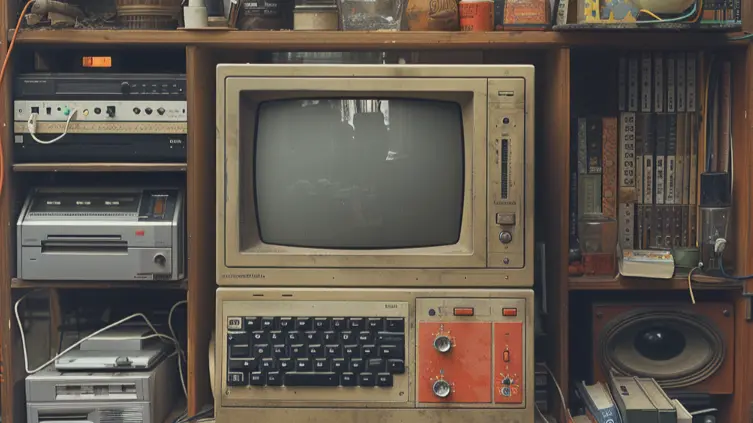
🏙️ Reimagining Your Computer as a City
Picture this: your motherboard is the land your city sits on. The CPU is your financial district — downtown — where all the big decisions are made. The memory (RAM) forms the highways and expressways connecting every part of town. Your hard drive? That’s your neighborhood — the land where your home sits. Inside your home are rooms, or what we call partitions: your bedroom, kitchen, garage, storage, and yard — each with a purpose.
Now, your operating system (like macOS or Windows) is the ZIP code — it defines where you live and how your mail (data) gets to you. And your programs are like your home renovations — custom tiles, an expanded kitchen island, a cozy reading nook. Beautiful, yes, but not something you can pack up easily when you move to a new home. Your furniture and clothes (your personal files), however, go wherever you go.
🌍 Two Worlds, Two Bubbles
Now imagine this city exists inside a bubble — a planet with its own ecosystem. There are two of these bubbles:
- The Apple Bubble
- The PC Bubble
Each was created with a very different philosophy — and that difference is where our antivirus story begins.
🍏 The Apple Bubble
When Steve Jobs built his bubble, he said, “We’ll secure our world like an iron fortress.” Every street, every home, every mailbox would be built and maintained by Apple itself. No outsiders. No local contractors. No third-party guards at the gate.
Everything inside the Apple Bubble — from the air you breathe to the locks on your doors — is part of a closed ecosystem. That’s why Macs tend to feel safe and controlled: the environment is tightly governed by the realm itself.
💻 The PC Bubble
Now on the other planet, Bill Gates took a different approach. He said, “Let the people decide how to protect their homes.” In the PC Bubble, citizens could hire their own guards (antivirus programs), install their own locks, and even design their own streets.
It was a beautiful kind of freedom — messy at times, but full of choice. For decades, PC users lived this way: self-reliant, diverse, and occasionally vulnerable.
🪐 Trouble in the Galaxy
For years, both bubbles thrived — evolving from the Stone Age of floppy disks to the digital age of cloud computing. Then one day, the Galaxy Owner — let’s call them Homeland Security — had a problem.
They couldn’t access a building within the PC Bubble. And it wasn’t just any building — it was a massive structure containing valuable data the Galaxy Owner needed to maintain cosmic order.
They reached out to Bill Gates. “Bill,” they said, “we can’t do our job if your citizens keep locking us out.”
Bill replied, “That’s the price of privacy. Our people have always managed their own security.”
But Homeland Security wasn’t amused. “Remember,” they said, “we own the galaxy. You’re just one planet among billions. Fix it — or we’ll do it for you.”
🔐 The Turning Point
And that, my friends, is how we got here.
After a decade of cyberattacks, ransomware, and government systems being locked out of their own data, Microsoft changed its approach. Starting with Windows 7, and gradually perfecting it through Windows 10 and Windows 11, Microsoft decided to follow Apple’s model: take control of the planet.
Now, every citizen must have a verified Microsoft Account — the digital equivalent of a passport. Through this unified ID system, Microsoft can ensure that every home, every street, and every public service in the PC Bubble is secured and accessible.
This is why Windows 11 is the most secure version of Windows ever built.
⚔️ So… Do You Still Need Antivirus?
Here’s the truth: Installing a third-party antivirus on Windows 11 is like hiring a mercenary in a city already protected by an elite government defense force.
It’s redundant, and in some cases, it causes more harm than good. When Windows Defender tries to enter your home to protect it, your “mercenary” might block them, thinking it’s an intruder — and suddenly, no one’s guarding the house.
This is why some systems become unstable: Norton, McAfee, and other antivirus programs can clash with Windows Defender, leaving you less secure, not more.
🧭 The Modern Answer
If you’re running Windows 11, stick with Microsoft Defender. Keep your system updated — that’s the real shield. If you’re still using Windows 10, understand that its bubble is slowly dissolving. Microsoft has stopped servicing it, meaning no more protection updates. It’s like living in an old city where the gates are no longer guarded.
No matter how many private guards you hire, the walls themselves are crumbling.
✨ Final Thoughts
Antivirus isn’t dead — it’s just evolved. The age of external guards is ending. The new era of security is integrated, intelligent, and invisible.
So before you install another pop-up security suite, remember: You may already be living inside the safest bubble — if you’re keeping it up to date.
Written by Gabriel Ng IT Technician and Concierge at Spacebar Sylvania Helping you understand your tech — one story at a time. 📍 www.spacebarsylvania.com
This page reproduces Gabe's authored LinkedIn article as a local, distraction-free reading edition. The narrative is rendered only as safe text—never as executable HTML.
Local images · Metadata removed · No LinkedIn scripts or backlinks